

Referred pain can make a problem feel as though it is coming from one body area when the actual source is somewhere else. For residents in Amsterdam, NY, this distinction matters because pain in the shoulder, arm, hip, buttock, or leg may involve nearby joints, muscles, the spine, nerves, or—less commonly—an internal organ.
Understanding the pattern can help people describe symptoms more accurately and recognize when chiropractic care may be reasonable, when medical evaluation is needed, and when pain should be treated as an emergency.
What is referred pain?
Referred pain is pain felt in a location different from the tissue causing it. The nervous system receives signals from several structures that may share spinal nerve pathways, and the brain can interpret the source incorrectly. This is sometimes described as a “convergence” of sensory signals. ([ncbi.nlm.nih.gov](https://www.ncbi.nlm.nih.gov/medgen/65869?utm_source=openai))
For example, irritation in the joints or muscles of the lower back may be felt in the buttock or upper thigh. A hip problem may be noticed mainly in the groin or knee. Muscles in the neck and upper back can contribute to discomfort around the shoulder blade or head.
Referred pain is usually described as deep, aching, pressing, or difficult to pinpoint. It may cover a broad area rather than following a narrow line. It is different from pain caused by direct irritation of a nerve root, which may produce burning, electric, shooting, or tingling sensations along a more recognizable pathway. ([pmc.ncbi.nlm.nih.gov](https://pmc.ncbi.nlm.nih.gov/articles/PMC10338069/?utm_source=openai))
How is referred pain different from radicular pain?
The two terms are often used interchangeably in everyday conversation, but they describe different patterns.
Referred pain generally comes from muscles, joints, discs, or other deep tissues. It does not necessarily mean that a nerve has been damaged.
Radicular pain results from irritation or compression involving a spinal nerve root. It may travel into an arm or leg and can be accompanied by numbness, pins-and-needles sensations, weakness, or changes in reflexes.
A person can have both types at once. For instance, a back injury may cause a dull ache in the lower back and buttock while also irritating a nerve that produces sharp pain farther down the leg. Because the treatment and urgency can differ, a symptom pattern should not be diagnosed by location alone.
Why can pain show up away from the problem?
The nervous system is not a simple wiring diagram in which every painful structure has one easily identified spot on the skin. Signals from muscles, joints, discs, and internal tissues can enter the spinal cord through overlapping pathways. The brain then uses context and past experience to estimate where the pain is coming from.
This explains why the most painful area is not always the area that needs attention. A stiff or irritated hip can be experienced as knee pain. Dysfunction in the upper back can feel like discomfort near the ribs or shoulder. A trigger point in a muscle may produce pain in a separate but predictable region.
The pattern is useful, but it is not definitive. Referred pain can also arise from internal organs. Chest discomfort that spreads to the arm, jaw, back, or shoulder should never be assumed to be a muscle or joint problem. ([ncbi.nlm.nih.gov](https://www.ncbi.nlm.nih.gov/books/NBK539789/?report=reader&utm_source=openai))
Can chiropractic care help referred musculoskeletal pain?
Chiropractic assessment may be appropriate when the symptoms appear related to the muscles, joints, or spine and there are no warning signs of a serious medical condition. Care may include a history, movement assessment, neurological screening, hands-on treatment, mobility work, and advice about activity or exercise.
Spinal manipulation or mobilization is one nondrug option studied for low-back and neck pain. Evidence summarized by the National Center for Complementary and Integrative Health suggests that these treatments may provide modest improvements in pain and function for some people, although results vary and the evidence is not uniformly strong. ([nccih.nih.gov](https://www.nccih.nih.gov/health/spinal-manipulation-what-you-need-to-know?6df6a1c6_page=3&85de4c3e_page=2&utm_source=openai))
Chiropractic care should not be viewed as a method for treating every cause of pain. It does not replace evaluation for infection, fracture, cancer, inflammatory disease, organ-related pain, or significant nerve problems. A careful practitioner should consider the entire symptom pattern rather than adjusting the area that hurts without investigating why it hurts.
What might an evaluation include?
A useful evaluation focuses on more than pain intensity. It may examine:
- When the pain began and whether there was a fall, lifting event, collision, or repetitive activity
- Whether symptoms change with sitting, walking, coughing, bending, sleeping, or reaching
- The exact location and quality of the pain
- Numbness, tingling, weakness, balance changes, or altered reflexes
- Fever, unexplained weight loss, fatigue, abdominal symptoms, or chest symptoms
- Current medications, recent illness, pregnancy, osteoporosis, cancer history, and other health conditions
Local seasonal habits can influence musculoskeletal symptoms. Snow shoveling, carrying wet clothing, navigating icy walkways, and spending more time indoors during colder months can increase strain on the back, neck, shoulders, and hips. These activities may contribute to a muscle or joint problem, but a clear activity-related explanation should not be used to dismiss unusual or worsening symptoms.
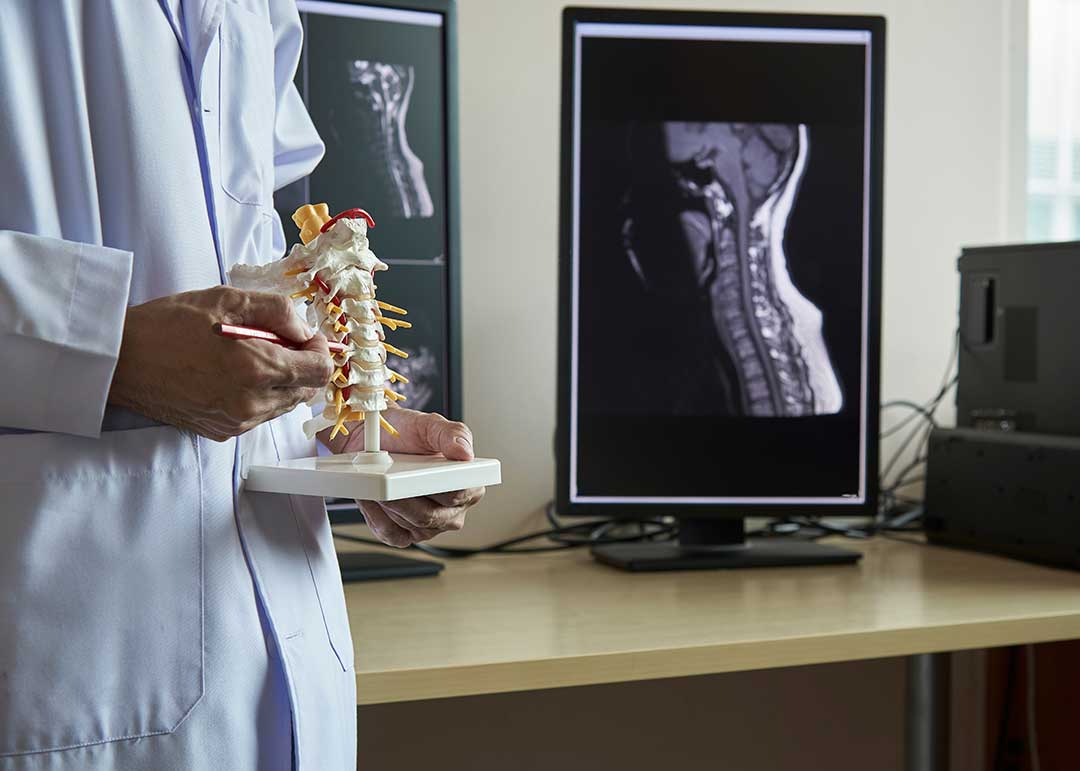
Imaging is not automatically necessary for every case of back or neck pain. It may become more useful when symptoms persist, follow an unusual pattern, involve neurological deficits, or raise concern for a structural or systemic condition.
What safety issues should people know about?
Temporary soreness, stiffness, headache, or increased discomfort can occur after spinal manipulation or mobilization and often resolves within a day. Serious complications are considered very rare, but they have been reported, and risk may be higher for people with certain underlying conditions. A thorough health history is therefore essential. ([nccih.nih.gov](https://www.nccih.nih.gov/health/spinal-manipulation-what-you-need-to-know?6df6a1c6_page=3&85de4c3e_page=2&utm_source=openai))
Neck manipulation deserves particular caution. People should disclose a history of stroke, vascular disease, connective-tissue disorders, recent neck trauma, severe headaches, or unusual neurological symptoms before any neck procedure. Sudden severe neck pain or headache accompanied by dizziness, double vision, slurred speech, facial drooping, trouble walking, or weakness requires emergency evaluation rather than hands-on treatment.
When is referred pain a medical warning sign?
Seek urgent medical care for pain accompanied by:
- Chest pressure, shortness of breath, sweating, nausea, or pain spreading to the arm, jaw, or back
- New loss of bowel or bladder control
- Numbness in the groin or inner thighs
- Progressive weakness in an arm or leg
- Fever, chills, or feeling acutely ill
- Major trauma or inability to bear weight
- Unexplained weight loss or a history of cancer
- Severe abdominal, pelvic, or flank pain
- Sudden neurological changes, fainting, or confusion
Pain that is steadily worsening, repeatedly returning, or interfering with sleep and ordinary activities also deserves a broader evaluation. The main question is not simply “Where does it hurt?” but “What pattern does it follow, what else is happening, and what conditions need to be ruled out?”
For many musculoskeletal cases, referred pain improves as the underlying joint, muscle, or spinal irritation settles. The safest approach is to match care to the likely source, monitor changes over time, and avoid assuming that the most noticeable location is the true origin.
