
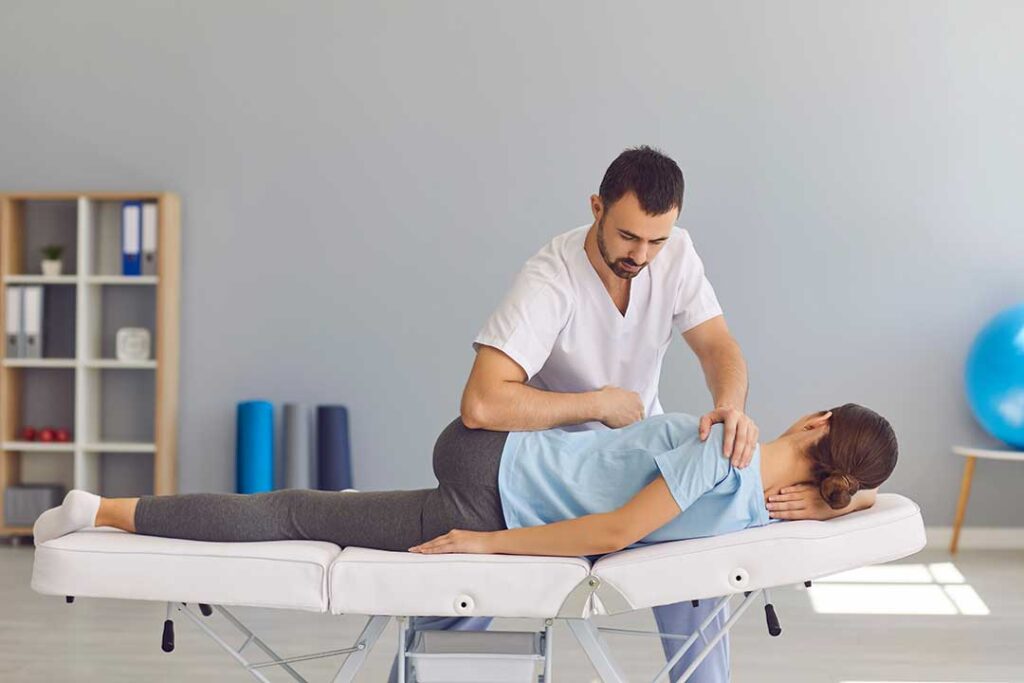
High heels can affect the way the feet, legs, pelvis, and spine share load. They do not automatically cause back pain, but frequent wear—especially during long periods of standing or walking—may increase strain for some people.
For residents of Amsterdam, NY, the issue can become more noticeable when dress shoes are combined with long commutes, standing at work, walking on uneven pavement, or moving between indoor spaces and slippery winter conditions.
How can high heels affect the back?
High heels raise the heel above the forefoot and shift the body’s center of mass forward. To remain balanced, a person may adjust the position of the ankles, knees, pelvis, trunk, and head.
These adjustments can contribute to:
- Increased pressure on the front of the foot
- Greater tension in the calf muscles and Achilles tendon
- Changes in pelvic rotation
- More work for the muscles that stabilize the lower back
- Reduced balance and a shorter, less natural stride
The common explanation that high heels always force the lower back into an exaggerated arch is too simple. Research has found different postural responses depending on heel height, shoe design, walking speed, experience, and the individual’s existing movement patterns. Some studies have found changes in pelvic motion without a meaningful change in lumbar curvature. ([pubmed.ncbi.nlm.nih.gov](https://pubmed.ncbi.nlm.nih.gov/28987767/?utm_source=openai))
Do high heels directly cause low back pain?
Not necessarily. High heels may contribute to back discomfort, but they are only one possible factor. Pain can also be influenced by prolonged standing, weak or fatigued muscles, limited hip or ankle mobility, previous injuries, body weight, work demands, and other footwear choices.
A research review found that the relationship between high-heel use and low back pain is more complicated than many online explanations suggest. Some people experience symptoms quickly, while others tolerate heels without noticeable back problems. ([pmc.ncbi.nlm.nih.gov](https://pmc.ncbi.nlm.nih.gov/articles/PMC5537921/?utm_source=openai))
The most useful question is not simply, “Are high heels bad?” It is, “How does this particular pair affect movement, comfort, and fatigue over time?”
Why might symptoms appear after several hours?
Discomfort may build gradually rather than begin with the first few steps. As the feet and calves tire, a person may change stride length, lean differently, or rely more heavily on the muscles around the hips and lower back.
Standing in one place can be especially demanding because the body cannot spread the workload through regular walking. A narrow heel may also require constant small balance corrections. Those corrections are usually harmless in moderation, but they can become uncomfortable during a long event, work shift, or day spent walking.
High heels may also make it harder to respond to uneven surfaces. In winter, snow, ice, slush, and wet flooring can increase the need for balance and make a rigid or unstable shoe more problematic. The immediate concern in those conditions may be a fall or ankle injury rather than back strain.
Is a lower heel always better?
A lower heel often reduces the forward shift in body weight, but heel height is not the only factor. A shoe with a moderate heel may still be uncomfortable if it has a narrow toe box, poor cushioning, limited stability, or a hard sole.
A more supportive design generally has:
- Enough room for the toes to rest without squeezing
- A secure fit that does not require gripping with the toes
- A stable heel and sole
- Cushioning appropriate for the surface
- A heel height that feels manageable during normal walking
- No obvious bending, twisting, or slipping of the foot inside the shoe
A platform-style shoe may reduce the effective angle between the heel and forefoot compared with a very steep heel, but it can still be heavy or unstable. Comfort and control during walking matter more than the appearance of the shoe alone.
Can occasional use still cause problems?
Occasional wear is less likely to create an ongoing problem than frequent, prolonged use, but a single event can still trigger temporary pain. This is more likely when someone is unaccustomed to heels, wears them for many hours, walks farther than usual, or already has foot, hip, or back symptoms.
A practical approach is to limit the amount of time spent standing or walking in the shoes. Sitting periodically, changing into flatter footwear for travel, and avoiding unnecessary walking on uneven or slippery surfaces can reduce total strain.
It also helps to avoid suddenly increasing heel height. Someone who usually wears flat, flexible shoes may need time to adapt to a much higher heel.
What can help reduce back strain while wearing heels?
Small changes can make the day easier without assuming that every symptom requires the same solution.
Consider:
- Wearing the lowest, most stable heel that meets the occasion
- Changing shoes before and after extended walking
- Taking brief sitting or walking breaks instead of standing continuously
- Stretching the calves gently after removing the shoes
- Using comfortable, supportive footwear for errands and transportation
- Avoiding shoes that cause numbness, burning, pinching, or repeated blisters
- Paying attention to whether pain improves after the shoes are removed
Strength and mobility also matter. Comfortable movement of the ankles, hips, and upper back can help the body distribute load more effectively. However, exercises should not be used to push through sharp pain or symptoms that are worsening.
When should back pain be medically evaluated?
Back pain that is mild and clearly linked to a particular pair of shoes may improve after rest, footwear changes, and normal gentle movement. Persistent or recurring symptoms deserve more careful attention, especially if they interfere with sleep, work, walking, or daily activities.
Prompt medical evaluation is appropriate for back pain accompanied by:
- New weakness in a leg
- Numbness that is spreading or severe
- Loss of bladder or bowel control
- Numbness in the groin or saddle area
- Fever, unexplained weight loss, or feeling seriously ill
- Pain after a significant fall or collision
- Severe pain that is rapidly getting worse
A chiropractor, physician, physical therapist, or other qualified healthcare professional may assess the spine, hips, legs, and feet to determine whether footwear is contributing to the problem or whether another condition needs attention. The goal is not simply to blame the shoes, but to identify the movement and health factors that are making symptoms persist.
For many local residents, the most sensible strategy is not complete avoidance of high heels. It is using them selectively, reducing prolonged standing and walking, choosing stability over extreme height, and treating recurring pain as useful information rather than something to ignore.
